
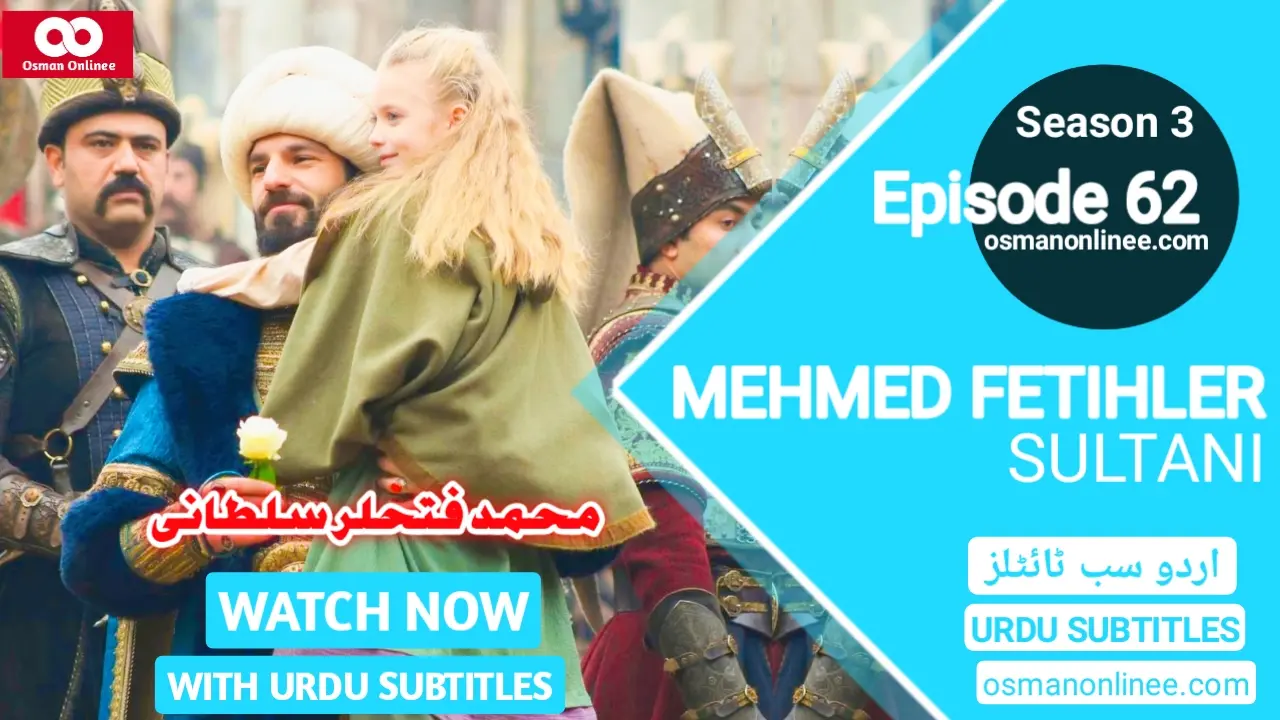
Mehmed Fetihler Sultani Season 3 Episode 62 With Urdu Subtitles
A Different Lens: Understanding the Episode Beyond Power and Politics
Mehmed: Fetihler Sultanı Season 3 Episode 62 invites the audience to slow down and observe conquest not as a moment of celebration, but as a complex human experience. In this episode, the fall of the city does not conclude the story; instead, it opens a deeper narrative about fear, identity, and the fragile nature of control. For viewers engaging with Urdu subtitles, the episode resonates strongly because its emotional and cultural layers are as important as its historical setting.
Rather than presenting victory as a final destination, Episode 62 treats it as a beginning filled with uncertainty. Streets that appear silent conceal tension, and doors that seem closed hide unfinished conflicts. The episode carefully shows that when empires expand, the greatest struggle often unfolds after swords are lowered.
Historical Context Explained Simply
Why Control of Cities Mattered More Than Winning Battles
In medieval history, winning a battle did not guarantee power. Cities represented administration, economy, and legitimacy. Without securing the loyalty—or at least submission—of urban populations, no empire could survive long. Sultan Mehmed II was deeply aware of this reality, and Episode 62 reflects that understanding through its narrative choices.
The city shown in this episode is not merely a geographic prize. It represents stability, trade routes, and political influence across the Black Sea region. For Urdu-speaking audiences, this context is essential to understanding why the Ottomans could not afford half-victories or rushed decisions.
Urban Life and Fear After Conquest
History records that the most dangerous phase of conquest often came after the gates were opened. Narrow streets, unfamiliar neighborhoods, and hidden resistance made cities unpredictable. Episode 62 mirrors this reality by showing fragmented encounters instead of grand battle scenes. The fear felt by both soldiers and civilians becomes a central element of the story.
Sultan Mehmed as a Human Figure, Not Just a Ruler
Leadership Through Presence
One of the most striking aspects of this episode is Sultan Mehmed’s physical movement toward the heart of danger. For many viewers, this may appear as courage, but historically it served a deeper purpose. A ruler’s presence during moments of uncertainty reinforced trust, discipline, and order.
From a cultural perspective familiar to South Asian audiences, leadership is often associated with nazdeeki—closeness to one’s people. Episode 62 subtly reflects this idea by portraying Mehmed not as a distant emperor, but as a leader who understands that authority must be visible to remain effective.
The Emotional Cost of Absolute Authority
The episode also shows the isolation that comes with power. Mehmed carries responsibility alone, knowing that every decision can stabilize or destroy the fragile order forming inside the city. This portrayal humanizes him, presenting leadership as sacrifice rather than privilege.
Princes, Commanders, and the Weight of Inheritance
Princes Learning the Reality of Power
The şehzades are not protected by titles in this episode. Their exposure to chaos serves as a form of education—one that history often demanded from future rulers. The episode suggests that leadership without hardship creates weakness, a theme deeply rooted in historical governance traditions.
Commanders in a Broken Battlefield
Urban warfare disrupts hierarchy. Orders lose clarity, and survival depends on judgment rather than rank. Episode 62 emphasizes adaptability, reminding viewers that intelligence and restraint often matter more than strength in confined environments.
Cultural Themes That Speak to Urdu Audiences
Loyalty and Betrayal as Moral Tests
The episode strongly highlights how personal ambitions can undermine collective goals. Loyalty, when demanded through fear alone, rarely lasts. This message aligns with historical experiences across many empires, not just the Ottomans.
Fear as a Shared Human Experience
Fear is portrayed not as weakness but as a universal response to uncertainty. Soldiers fear ambush, civilians fear retaliation, and leaders fear losing control. Episode 62 treats fear as a force that shapes decisions quietly but powerfully.
Silence After Violence
The episode’s pacing slows after moments of conflict, allowing silence to dominate. This silence symbolizes unresolved tension—the kind that lingers long after conquest and determines whether peace is possible.
What This Episode Teaches About History
Rather than glorifying domination, Episode 62 educates viewers about the responsibilities that follow victory. It suggests that true conquest lies not in destruction, but in the ability to restore order without losing moral direction.
For viewers reading through Urdu subtitles, this lesson connects strongly with broader historical narratives where empires rose quickly but fell due to internal fractures.
I dedicate my time and effort to sharing Islamic history and the legacy of our heroes with the world. Your small donation helps me continue this mission. May Allah reward your support. 🤲
💖 Don’t be shy, even $3 makes a difference and helps keep this work going! ❤️
Mehmed Fetihler Sultani Season 3 Episode 62 With Urdu Subtitles
SOURCE 1
Looking Forward: What Comes Next
Challenges of Governance
With the city nominally under control, the Ottomans now face the harder task: governance. History shows that administration, justice, and inclusion determine whether conquest leads to stability or rebellion.
SOURCE 2
Seeds of Future Conflict
The episode subtly introduces unresolved tensions that may resurface later. Such narrative choices reflect historical patterns where suppressed conflicts return stronger if left unaddressed.
SOURCE 3
I dedicate my time and effort to sharing Islamic history and the legacy of our heroes with the world. Your small donation helps me continue this mission. May Allah reward your support. 🤲
💖 Don’t be shy, even $3 makes a difference and helps keep this work going! ❤️
Summary Table
| Aspect | Meaning in Episode 62 |
|---|---|
| City Control | Test of legitimacy, not strength |
| Sultan’s Presence | Symbol of authority and trust |
| Urban Fear | Hidden resistance and uncertainty |
| Silence | Indicator of unresolved conflict |
Key Takeaways
- Victory does not end conflict; it transforms it.
- Leadership requires visibility and emotional strength.
- Cities test empires more than open battlefields.
- Fear and silence shape history as much as violence.
Conclusion: A Lesson Beyond the Screen
Mehmed Fetihler Sultani Season 3 Episode 62 With Urdu Subtitles stands out not for its spectacle, but for its restraint. By focusing on human emotions, cultural realities, and historical responsibility, the episode offers viewers a deeper understanding of conquest.
It reminds us that history is not only written by those who win battles, but by those who manage the silence that follows them.
Frequently Asked Questions
Yes. While dramatized, it reflects authentic historical challenges of medieval urban conquest.
Historically, visible leadership strengthened morale and prevented disorder during critical moments.
Militarily, yes, but emotionally and politically, it opens new challenges that shape future events.