
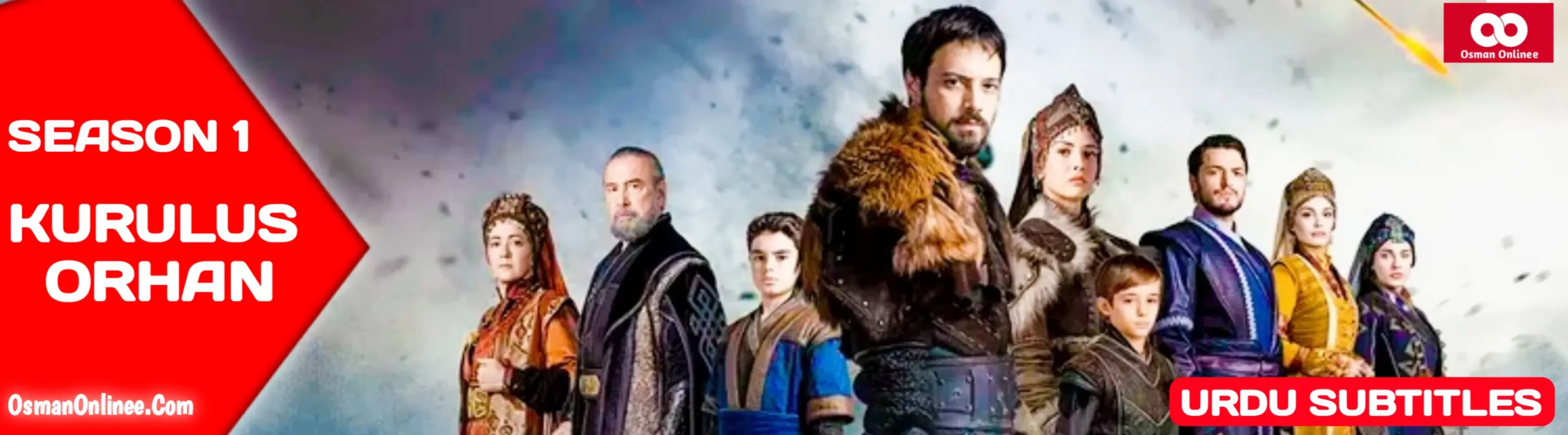
Kurulus Orhan Season 1 With Urdu Subtitles
Why This Narrative Speaks Differently to Urdu Readers
Kurulus Orhan Season 1 occupies a rare space where political history intersects with moral reflection. For Urdu readers, this story does not feel distant or foreign. Its themes echo the language of classical Urdu history, where leadership is examined through insaf, sabr, zimmedari, and amanat. This season is not driven by spectacle alone; it unfolds as a historical chronicle layered with ethical questions.
Rather than glorifying authority, the narrative repeatedly asks whether power deserves loyalty if it lacks justice. This question lies at the heart of Urdu historical thought. Kings and commanders are never remembered only for victories, but for the character they displayed when power tested them. Season 1 builds its story on this very foundation, making it resonate deeply with an audience trained to read history as moral instruction.
Orhan Bey: Leadership as Amanat in the Urdu Tradition
From an Urdu cultural lens, Orhan Bey is not portrayed as a triumphant heir. He appears instead as a man burdened by inheritance. His leadership reflects the idea of amanat—a trust placed upon someone who must answer not only to people, but to history and faith. This perspective transforms Orhan from a political figure into a moral one.
Urdu historical narratives often highlight rulers who feared injustice more than defeat. Orhan fits this tradition. His silences carry weight, his patience reflects discipline, and his decisions are shaped by foresight rather than emotion. He understands that authority taken through force may command obedience, but authority sustained through justice earns loyalty.
This makes Orhan Bey’s journey deeply relatable for Urdu readers. His strength lies not in domination, but in restraint—a quality consistently praised in Urdu ethical literature.
Inheritance and Responsibility: Beyond Bloodline
One of the most powerful undercurrents of Kurulus Orhan Season 1 is its treatment of inheritance. Leadership is never presented as a right secured by blood. Instead, it is portrayed as a responsibility that must be proven daily. This concept mirrors classical Urdu historiography, where lineage alone never guarantees legitimacy.
Orhan Bey’s internal struggle reflects this understanding. He does not rely on his father’s name to justify his authority. Instead, he attempts to earn acceptance through conduct. This approach separates him from rulers who mistake inheritance for entitlement.
The season quietly reinforces a timeless Urdu lesson: inheritance without accountability leads to decay. True succession demands moral readiness, not merely historical connection.
Osman Bey as Soch, Not Shadow
Osman Bey’s presence in Season 1 functions less as authority and more as soch—a guiding philosophy. For Urdu audiences, this reflects a familiar narrative structure where elders influence decisions even in absence. Wisdom, once established, does not disappear; it transforms into reference.
Osman Bey’s ideals shape Orhan’s choices indirectly. He is not obeyed; he is remembered. This distinction is critical. Urdu literature often celebrates figures whose influence survives beyond their physical role, shaping generations through example rather than command.
Through this dynamic, the season emphasizes continuity of values rather than repetition of actions. It suggests that honoring a legacy does not mean copying it, but protecting its essence while adapting to change.
Kurulus Orhan Season 1 With English Subtitles
*
*
*
*
*
*
*
*
I dedicate my time and effort to sharing Islamic history and the legacy of our heroes with the world. Your small donation helps me continue this mission. May Allah reward your support. 🤲
Nilüfer Hatun: Tahzeeb and Emotional Balance
Nilüfer Hatun represents tahzeeb—cultural refinement that tempers authority. Her influence is not assertive, yet it is decisive. Urdu storytelling frequently includes such characters who stabilize power structures through empathy rather than control.
She understands emotions before reacting to them. In moments of tension, her presence slows escalation and invites reflection. This ability positions her as an essential emotional anchor within the narrative. Kurulus Orhan Season 1 Episode 14 With Urdu Subtitles
From an Urdu perspective, Nilüfer Hatun symbolizes the idea that leadership ecosystems require balance. Without emotional intelligence, authority becomes brittle. Her character quietly reinforces the belief that compassion is not weakness, but wisdom.
Princess Asporça: Guroor, Zawal, and Psychological Resistance
Princess Asporça embodies guroor—pride shaped by loss. Urdu readers, deeply familiar with literature on fallen empires, will recognize her emotional landscape. She is not driven by cruelty; she is driven by grief. Her anger masks fear of irrelevance.
In Urdu historical consciousness, decline (zawal) is not merely political—it is psychological. Asporça’s refusal to adapt reflects this reality. She clings to identity because surrender feels like erasure. Her resistance is tragic, not villainous. Kurulus Orhan Season 1 Episode 14 With Urdu Subtitles
Through her, the season explores how history wounds individuals long before it replaces systems. Asporça’s character adds emotional realism and reinforces a recurring Urdu theme: dignity cannot survive without transformation.
Hector: Authority Without Akhlaq
Hector represents power stripped of akhlaq—moral grounding. His leadership relies on secrecy and intimidation, reflecting a model frequently criticized in Urdu political thought. Such authority may dominate temporarily, but it lacks permanence. As Hector’s confidence weakens, his decisions grow harsher. This progression aligns with a familiar Urdu lesson: injustice accelerates collapse. Authority unsupported by ethical legitimacy begins to consume itself.
Rather than portraying Hector as a simple enemy, the season presents him as a cautionary figure. His arc demonstrates that power without conscience is inherently unstable.
Flavius and Fatma Hatun: Ishq, Farz, and Inner Conflict
The storyline of Flavius and Fatma Hatun introduces a deeply Urdu dilemma: ishq versus farz. Urdu literature often places characters at this crossroads, where personal truth conflicts with imposed duty.
Flavius is not portrayed as inherently cruel. He is conflicted, torn between loyalty and conscience. Fatma Hatun represents sincerity untouched by manipulation, making her presence destabilizing for a system built on obedience. Their story suggests that love, in Urdu tradition, is not escapism—it is a test. Through this arc, the season highlights how private choices carry public consequences, reinforcing the moral weight of individual decisions.
Halime and Dursun: Safar as Transformation
Halime and Dursun’s journey reflects safar—a recurring motif in Urdu literature where travel becomes a path to self-discovery. Removed from safety, they confront vulnerability and truth. Their growth is not fueled by power, but by endurance. This reinforces an Urdu belief that strength is forged through hardship rather than privilege. Their story balances the political narrative by grounding it in human resilience.
Through them, the season reminds readers that history is lived by ordinary people, not only leaders.
Justice, Sabr, and Imaan: Ethical Foundations of the Season
For Urdu readers, Kurulus Orhan Season 1 resonates because it consistently prioritizes ethical values:
- Insaf as restraint, not retaliation
- Sabr as wisdom, not weakness
- Imaan as guidance, not coercion
These values shape decisions subtly, giving the narrative moral depth without overt preaching. The season trusts the audience to recognize ethical weight through action rather than dialogue.
Collective Memory and Historical Continuity
Urdu historical consciousness places great importance on collective memory. This season aligns with that tradition by emphasizing continuity over spectacle. Events are meaningful not because they are dramatic, but because they contribute to a longer moral journey. Decisions made quietly echo into the future. This approach mirrors Urdu historiography, where history unfolds gradually, shaped by character as much as conflict.
Why This Page Stands Independently
This page exists to interpret Kurulus Orhan Season 1 through a distinctly Urdu cultural and ethical lens. It does not summarize events, nor does it repeat analytical frameworks used elsewhere. Instead, it translates the narrative into values, emotions, and moral questions familiar to Urdu readers.
It functions as a standalone interpretive space, complementing broader analysis without duplication.
Key Reflections for Urdu Readers
- Leadership is presented as trust, not entitlement
- Decline is shown as emotional before political
- Love functions as moral testing ground
- Patience is elevated as strength
- Justice defines legitimacy
Conclusion: A Narrative Rooted in Values, Not Power
Kurulus Orhan Season 1 speaks powerfully to Urdu readers because it aligns history with ethics. It reminds us that authority without character collapses, and inheritance without responsibility decays. Through Orhan Bey’s restraint, Asporça’s grief, Nilüfer Hatun’s balance, and Flavius’s conflict, the season constructs a moral landscape where every choice matters.
This is not merely a historical account. It is a reflection on how values shape destiny—a theme that has always stood at the heart of Urdu storytelling.