
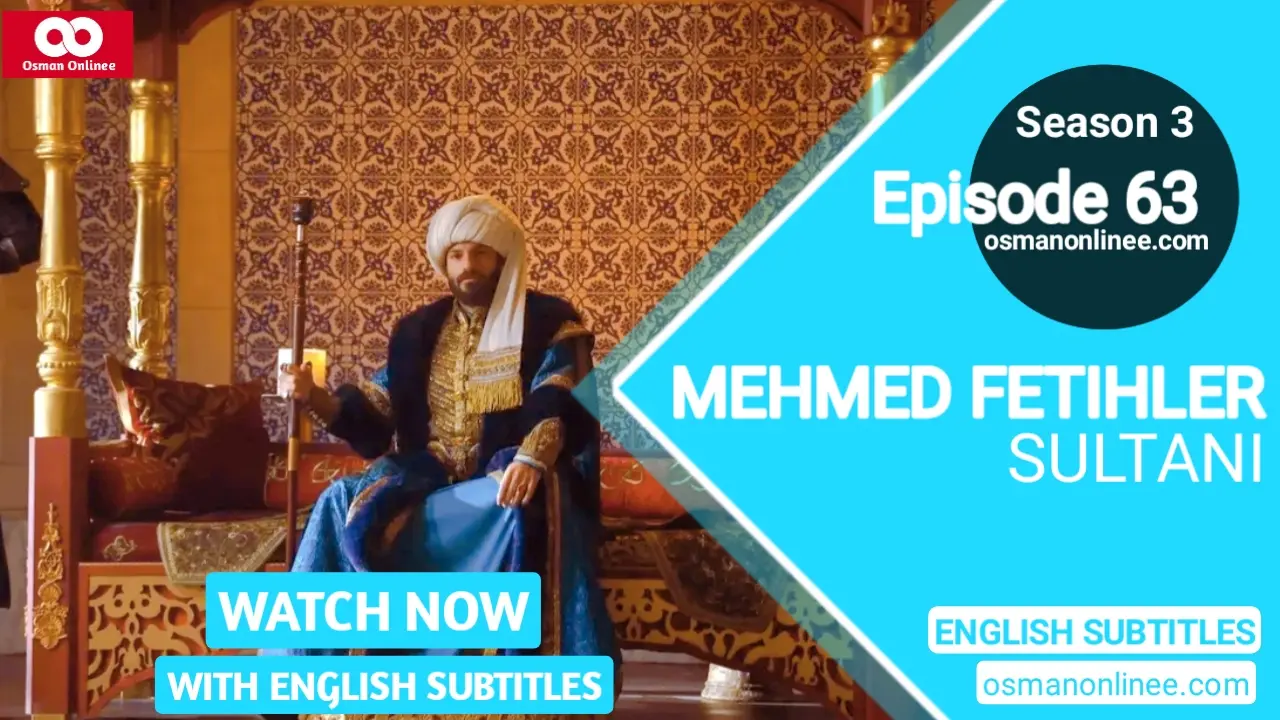
Mehmed Fetihler Sultani Season 3 Episode 63 With English Subtitles
What Truly Begins After a City Is Taken
The fall of a fortified city is often remembered as a moment of thunder—walls collapsing, armies advancing, banners rising. Yet history is rarely decided in noise. It is decided in the quiet that follows. Once the gates are open and resistance appears broken, power enters its most fragile stage. Victory does not settle authority; it unsettles it. This is the moment in which rulers are tested not by enemies, but by success itself.
For Mehmed, the capture of this strategic city does not signal relief. It signals responsibility. The city he now controls is alive, observant, and cautious. Its people have endured changing masters before. They know that conquest can be temporary, but governance leaves lasting scars. As the dust of battle settles, the city does not erupt in rebellion, nor does it rush into submission. Instead, it waits. And in that waiting lies danger.
The Psychology of a Conquered City
A conquered city does not behave like a defeated army. Soldiers break; cities adapt. Within the streets, fear blends with calculation. Civilians watch the new rulers carefully, measuring gestures rather than proclamations. Former elites disappear, not because they have accepted defeat, but because survival demands patience. Power does not vanish with defeat; it relocates into shadows.
Mehmed understands this instinctively. He knows that if uncertainty hardens into resentment, resistance will return—not openly, but quietly, through sabotage, betrayal, and divided loyalties. This is why his first actions are not dramatic. He slows everything down. Movement becomes regulated. Authority becomes visible but restrained. Violence is monitored, not encouraged. In doing so, he denies chaos the oxygen it needs to grow.
Why Mehmed Rejects the Intoxication of Victory
History is filled with conquerors who lost everything after winning. The reasons are always the same: unchecked soldiers, empowered subordinates, and revenge mistaken for justice. Mehmed chooses a different path. Instead of rewarding aggression, he rewards discipline—though not immediately. He allows behavior to reveal intention.
This calculated restraint creates tension among his own commanders. Some interpret silence as weakness, assuming that the absence of immediate punishment grants them freedom. These men begin asserting authority on personal terms, enforcing justice without mandate, claiming property, settling old scores. They believe they are strengthening control. In reality, they are exposing themselves.
Mehmed does not correct them publicly. He does not need to. Power misused always leaves a trail. Influence quietly shifts away from these figures, resources become restricted, trust evaporates. When consequences arrive, they feel inevitable rather than emotional. Authority is preserved because it is not rushed.
The Beys and the Fracturing of Unity
Victory changes relationships. While war demands unity, peace reveals ambition. Among the beys, the illusion of shared purpose begins to crack. Some crave recognition, others crave territory, and.attachment to discipline weakens without the immediate pressure of battle. This is where Mehmed’s leadership sharpens.
Some wait. They restrain their men, protect civilians, and follow procedure even in uncertainty. They do not dominate scenes or demand praise. Yet these are the figures upon whom empires are built. History rarely remembers their names loudly, but it remembers their work. Mehmed notices them. Trust begins to align not with bravery, but with reliability.
Hidden Resistance and the Survival of Influence
The city’s defeat does not end opposition; it transforms it. Underground passages, forgotten tunnels, and concealed networks awaken. Former elites seek escape routes for wealth, for themselves, or for information valuable to foreign powers. Some attempt to flee. Others attempt negotiation. Resistance becomes strategic rather than violent.
Mehmed anticipates this shift. Intelligence replaces brute force as the primary tool of control. Interrogation, observation, and informants become as valuable as soldiers. This is not cruelty; it is realism. Stability is achieved not by eliminating every enemy, but by understanding them.
Law, Religion, and the Architecture of Legitimacy
One of Mehmed’s most significant choices lies in how he treats the city’s cultural and religious spaces. Destruction would satisfy anger but breed eternal hostility. Preservation, redefinition, and regulation instead create legitimacy. By introducing a law where vengeance is expected, he transforms fear into predictability.
People do not obey power forever, but they obey systems that function. Justice applied evenly—without spectacle—becomes the foundation of acceptance. Over time, legitimacy grows not from conquest itself, but from the order that follows it. Mehmed is not merely taking territory; he is integrating it.
The City as a Long-Term Political Challenge
Cities remember. They remember broken promises, excesses, and injustices long after armies move on. Mehmed understands that controlling memory is as important as controlling streets. His presence within the city is deliberate and symbolic. Where he stands, chaos recedes. Where he speaks, order follows. Authority becomes associated not with fear, but with structure.
Yet stability carries its own price. Decisions made now will have a lasting impact on the future. Beys who were restrained will remember being restrained. Ambitions suppressed do not disappear; they wait. The foundations of empire are laid alongside the seeds of future conflict. This is unavoidable. What matters is whether the structure is strong enough to withstand what grows within it.
I dedicate my time and effort to sharing Islamic history and the legacy of our heroes with the world. Your small donation helps me continue this mission. May Allah reward your support. 🤲
💖 Don’t be shy, even $3 makes a difference and helps keep this work going! ❤️
Mehmed Fetihler Sultani Season 3 Episode 63 With English Subtitles
SOURCE 1
Themes Driving This Turning Point
At its core, this chapter explores the difference between winning and ruling. Violence can open gates, but it cannot sustain authority. Silence becomes a weapon stronger than steel. Restraint proves more powerful than aggression—the narrative shifts away from heroic conquest and toward imperial responsibility.
SOURCE 2
Mehmed’s strength lies not in his ability to destroy, but in his ability to stop destruction when it no longer serves a purpose. This restraint defines the kind of ruler he is becoming—and the kind of empire that will follow.
SOURCE 3
I dedicate my time and effort to sharing Islamic history and the legacy of our heroes with the world. Your small donation helps me continue this mission. May Allah reward your support. 🤲
💖 Don’t be shy, even $3 makes a difference and helps keep this work going! ❤️
How This Moment Shapes What Comes Next
What unfolds here determines everything that follows. Loyal administrators rise slowly. Reckless ambition is quietly isolated. Hidden resentment simmers beneath enforced order. Future crises, purges, and consolidations will trace their origins back to this phase.
This is not a dramatic chapter, but it is a decisive one. Empires are not born in battle; they are born in the management of victory.
Conclusion
The true test of Mehmed’s leadership does not arrive with the fall of walls, but with the responsibility that follows. He stands at a crossroads where many conquerors have failed, choosing discipline over indulgence, order over chaos, and legitimacy over fear. The city has been taken, but something far greater has begun—the slow, deliberate construction of imperial authority.
History will not remember this moment for its violence. It will remember it for its control.
Frequently Asked Questions
Militarily, yes. Politically and psychologically, it has only transformed.
Because predictable justice builds stronger authority than impulsive force.
Yes. Power struggles shift from battlefields to governance and loyalty.