
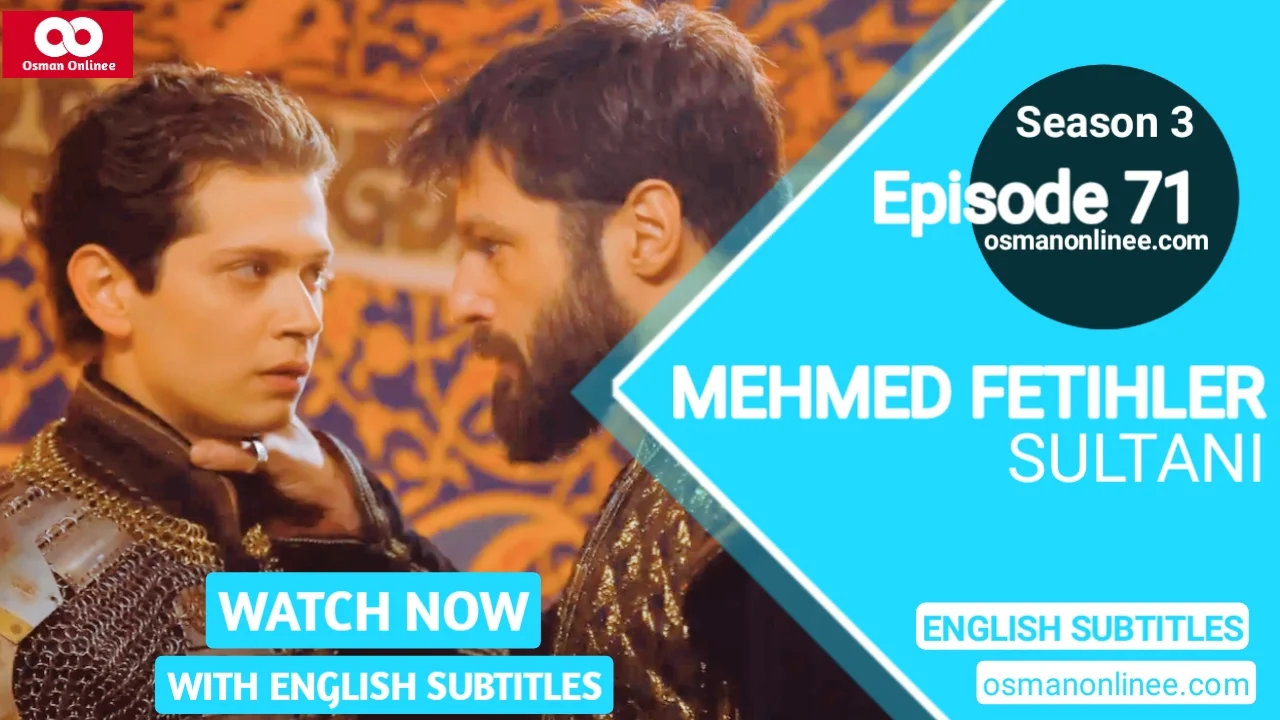
Mehmed Fetihler Sultani Season 3 Episode 71 With English Subtitles
Power, Loyalty, and the Expanding Ottoman Vision
In Mehmed Fetihler Sultani Season 3 Episode 71, the narrative shifts from reactive warfare to calculated empire-building. This is not an episode driven merely by battlefield tension; it is driven by ideological confrontation, internal suspicion, emotional fracture, and strategic foresight. Sultan Mehmed stands at a stage where every decision must serve two purposes at once: immediate survival and long-term supremacy. The writing carefully balances political maneuvering with deeply personal conflicts, reminding viewers that the foundation of empires is laid as much in private chambers as on open battlefields.
Unlike early episodes that emphasized raw ambition, Episode 71 reflects maturity in leadership. Mehmed is no longer just a conqueror in preparation — he is an architect of permanence. His gaze is fixed not only on territorial gains but on structural dominance: ports, trade corridors, political obedience, and dynastic continuity.
Sultan Mehmed’s Expanding Strategy
Sultan Mehmed’s focus on Biga and Gemlik reveals a sophisticated understanding of geography as destiny. Control of waterways has always defined the balance of power in Anatolia and the Marmara region. By targeting the Biga Strait, Mehmed secures a military bridge between Anatolia and Rumelia, ensuring fluid troop movement and defensive flexibility. Meanwhile, Gemlik Port carries economic significance; it strengthens maritime trade while weakening Byzantine logistical influence.
This dual approach — economic suffocation combined with military positioning — reflects historical Ottoman strategy. Before major sieges were launched, supply lines were secured and rival trade routes disrupted. Episode 71 subtly foreshadows the tightening grip that will eventually surround Constantinople, not through impulsive attack but through patient encirclement.
Yet beyond territorial ambition lies another order: Demirhan must be brought to court immediately. This is not a casual command. It signals Mehmed’s awareness that conquest without unity is fragile. Internal loyalty becomes as critical as external victory. By summoning Demirhan, the Sultan demonstrates a principle that defined Ottoman statecraft: authority must be centralized before it can expand.
The Fragility of Ambition: Şahinşah’s Dangerous Calculations
Şahinşah emerges as a study in political anxiety. Where Mehmed represents vision and discipline, Şahinşah represents fear masked as boldness. Knowing that his hidden dealings may soon surface, he considers eliminating Boran, Cerkutay, and Temirboğa to protect himself. This is not courage — it is desperation.
His character arc reflects a recurring theme in imperial history: betrayal rarely begins with hatred; it begins with insecurity. Şahinşah understands that once exposed, he will not merely lose influence — he will lose survival. That awareness pushes him toward reckless decisions that could ignite internal chaos.
The brilliance of Episode 71 lies in how it contrasts two leadership models. Mehmed consolidates through order and patience. Şahinşah reacts through secrecy and elimination. One builds; the other corrodes.
If exposed, Şahinşah’s betrayal would not simply remove a rival — it would send a message to every bey across Anatolia that loyalty is non-negotiable.
Nilüfer’s Captivity: Emotional Warfare and Dynastic Stakes
Nilüfer’s capture transforms the episode from political strategy into emotional tension. She is not merely a hostage; she symbolizes lineage, trust, and the future. In Ottoman culture, dynastic continuity was sacred. Protecting an unborn child meant protecting the state’s tomorrow.
Asporça’s decision to use Nilüfer as leverage demonstrates a deep understanding of psychological warfare. Instead of challenging Mehmed on open ground, she strikes at his emotional center. This forces the Sultan into a dilemma: act swiftly to save Nilüfer and risk broader strategic setbacks, or remain patient and risk personal tragedy.
Nilüfer’s confrontation with Dafne intensifies this narrative. Betrayal between women within the palace space carries symbolic weight. The palace is meant to represent loyalty and unity; when treachery grows there, it signals moral decay. The physical wound Nilüfer suffers becomes more than injury — it is a scar of trust broken.
Her struggle to protect her unborn child elevates the stakes beyond personal survival. It represents the fragile thread that ties present conflict to future stability.
Mehmed and Asporça: A Duel Beyond Swords
The conflict between Mehmed and Asporça evolves into a battle of philosophies rather than weapons. Mehmed seeks structured dominance, building systems that outlast individuals. Asporça thrives in unpredictability, manipulating emotion and secrecy to destabilize order.
When Asporça learns of Şahinşah’s betrayal, she gains a weapon more powerful than any army: information. The question becomes not whether she will use it, but when. Timing such a revelation could fracture alliances at the most vulnerable moment.
This layer of narrative complexity adds realism. In historical power struggles, secrets often shaped outcomes more decisively than open combat. Episode 71 reinforces that political intelligence is as critical as military might.
Germiyan Front: War Beyond the Capital
While the central drama unfolds around Mehmed’s authority, Germiyan introduces another dimension. War declarations here carry emotional and strategic consequences. Gonca’s deepening loyalty to Alaeddin reflects how personal bonds strengthen during political uncertainty. Their attempt to return safely to Bursa symbolizes civilian vulnerability amid elite rivalry.
Alaeddin’s newly gained intelligence may significantly influence Mehmed’s campaign. Throughout Ottoman history, information networks — scouts, envoys, informants — proved decisive. This subplot subtly honors that tradition, suggesting that upcoming victories may rely as much on insight as on force.
Love, Jealousy, and Blood in Bursa
The wedding preparations of Fatma and Yiğit introduce a fragile sense of normalcy. Yet peace in wartime is often temporary. Flavius’s unresolved emotions transform celebration into tragedy. His confrontation with Yiğit exposes buried tensions that parallel larger political betrayals.
Flavius is more than a jealous figure. He embodies wounded pride — a reminder that conquest affects not only territories but identities. When he drives his dagger into Yiğit, the act becomes symbolic. It represents resistance against change, against Ottoman consolidation, against personal loss.
Should Yiğit fall, the consequences would ripple beyond romance. Political alliances within Bursa could weaken. Hidden secrets might surface. Public morale during wartime could suffer.
Themes Interwoven Through Episode 71
One of the episode’s strengths lies in thematic consistency.
Loyalty versus betrayal defines every storyline, from Şahinşah’s conspiracy to Dafne’s treachery. Motherhood and lineage anchor the emotional core, reminding viewers that empire is generational. Control of ports symbolizes economic foresight, while secrets represent invisible weapons shaping visible outcomes.
The narrative suggests that empires collapse not from external assault alone but from fractures within. Mehmed’s greatest challenge may not be Byzantine resistance, but internal division.
Looking Ahead: Foundations of a Historic Siege
Episode 71 feels like preparation for something monumental. By consolidating ports, disciplining rebellious beys, and neutralizing internal conspiracies, Mehmed is laying structural groundwork. Historically, the Ottoman conquest model relied on encirclement, resource control, and psychological dominance before decisive action.
The episode’s pacing reflects this methodical build-up. Nothing feels rushed because empire-building is never impulsive. It is deliberate, layered, and patient.
I dedicate my time and effort to sharing Islamic history and the legacy of our heroes with the world. Your small donation helps me continue this mission. May Allah reward your support. 🤲
💖 Don’t be shy, even $3 makes a difference and helps keep this work going! ❤️
Mehmed Fetihler Sultani Season 3 Episode 71 With English Subtitles
SOURCE 1
If Şahinşah’s betrayal is revealed, it could serve as a dramatic purge that strengthens Mehmed’s legitimacy. If Asporça times her revelation strategically, it could ignite temporary instability that tests the Sultan’s resilience. Either outcome pushes the narrative toward larger confrontations.
SOURCE 2
Conclusion
Mehmed Fetihler Sultani Season 3 Episode 71 stands out not because of a single dramatic event, but because of its intricate layering of power, emotion, and foresight. Sultan Mehmed emerges as a leader balancing heart and empire, strategy and sentiment. Around him swirl figures driven by fear, ambition, love, and survival.
SOURCE 3
The episode reminds us that conquest is not simply about expanding borders. It is about mastering loyalty, controlling resources, safeguarding lineage, and anticipating betrayal before it strikes. Every subplot — from Nilüfer’s captivity to Germiyan’s war preparations — feeds into a larger vision of imperial consolidation.
As tensions escalate, one truth becomes clear: the Ottoman future will not be shaped solely by battles won on open fields, but by decisions made in moments of secrecy, sacrifice, and resolve.
Key Takeaways
- Sultan Mehmed prioritizes strategic ports to secure long-term dominance.
- Internal betrayal poses a greater threat than external enemies.
- Nilüfer’s storyline symbolizes dynastic continuity and emotional leverage.
- Asporça’s possession of political secrets could reshape alliances.
- Personal conflicts in Bursa may create broader political consequences.
Frequently Asked Questions
What is Sultan Mehmed’s main strategic focus in this episode?
He aims to secure maritime routes and enforce internal loyalty, preparing the empire for larger future campaigns.
Why is Nilüfer’s captivity so significant?
It connects personal vulnerability to political stability, highlighting the importance of dynastic continuity.
How does Şahinşah’s betrayal impact the empire?
If exposed, it could trigger a decisive shift in internal power structures and reinforce Mehmed’s authority.
What role does Germiyan play in the broader narrative?
It expands the geopolitical scope of the conflict and introduces intelligence that may alter upcoming strategies.
- Kurulus Orhan Season 1 Episode 9 With English Subtitles – When Leadership Begins to Carry the Weight of History
- Mehmed Fetihler Sultani Season 3 Episode 60 With Urdu Subtitles
- Kurulus Orhan Season 1 Episode 10 With Urdu Subtitles
- Kurulus Orhan Season 1 Episode 13 With Urdu Subtitles
- Kurulus Orhan Season 1 Episode 13 With English Subtitles