
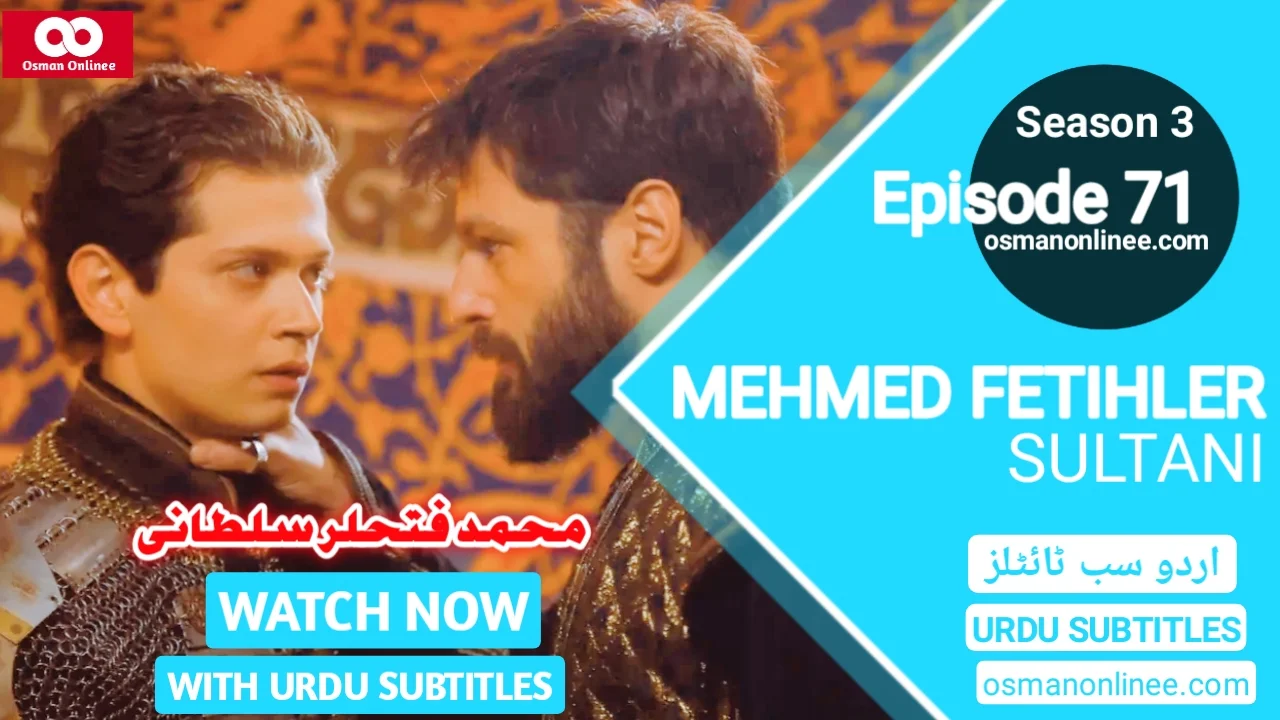
Mehmed Fetihler Sultani Season 3 Episode 71 With Urdu Subtitles
A Turning Point in Power, Loyalty, and Imperial Politics
In Mehmed: Fetihler Sultanı, the story has now reached a stage where every action carries long-term consequences. Season 3 Episode 71 develops a narrative that is less about sudden battles and more about calculated moves, hidden betrayals, and strategic positioning. The episode gradually builds a tense atmosphere where personal emotions and political ambitions collide. Sultan Mehmed appears increasingly aware that the strength of an empire is determined not only by its military victories but by the unity and loyalty of those who stand within its ranks.
This chapter reveals a deeper layer of Ottoman statecraft. While enemies exist outside the borders, the real danger often emerges from those who hide their intentions behind loyalty. The story therefore evolves into a careful balance between power consolidation and the management of fragile alliances. Much like the rise portrayed in Kuruluş: Osman, the empire’s growth is not simply the result of conquest but of discipline, patience, and the ability to anticipate betrayal before it unfolds.
Sultan Mehmed’s Calculated Expansion
The strategic attention given to Biga and Gemlik reveals how carefully Sultan Mehmed views geography. These locations are not chosen randomly. Biga Strait represents control over movement between key territories, ensuring the Ottoman army can travel swiftly when conflicts arise. At the same time, Gemlik Port holds economic significance, connecting inland trade routes with the wider maritime world.
In historical contexts, controlling ports often meant controlling wealth, supplies, and political influence. Mehmed’s approach reflects this understanding. Instead of rushing toward immediate glory on the battlefield, he focuses on securing the foundations that will support future campaigns. By strengthening logistical networks, he prepares the empire for sustained expansion rather than temporary victories.
Yet the Sultan’s strategy extends beyond geography. His command to bring Demirhan to his presence immediately signals another concern — internal discipline. Mehmed realizes that if the frontier beys begin acting independently, the empire’s unity will weaken. Summoning Demirhan therefore becomes a political statement, reminding every leader that the authority of the throne must remain unquestioned.
The Shadow of Betrayal: Şahinşah’s Desperation
Among the many figures navigating the political landscape, Şahinşah stands out as a symbol of insecurity and fear. Unlike other commanders who openly challenge enemies, he operates through secrecy and manipulation. His willingness to eliminate Boran, Cerkutay, and Temirboğa reveals how far he is willing to go to protect his hidden schemes.
This behavior highlights a recurring reality in imperial history: ambition without loyalty eventually leads to destruction. Şahinşah believes that removing witnesses will protect him, but such actions often deepen suspicion rather than eliminate it. The more he struggles to hide his betrayal, the more unstable his position becomes.
Through this storyline, the episode reflects an important political truth. Empires rarely fall because of strong enemies; they fall because internal figures choose personal survival over collective stability. Şahinşah embodies this danger perfectly, standing as a reminder that betrayal often begins quietly before erupting into open chaos.
Nilüfer’s Captivity and the Emotional Battlefield
The situation surrounding Nilüfer introduces an emotional dimension that transforms the political conflict into something deeply personal. Her captivity places immense pressure on Sultan Mehmed, forcing him to confront a dilemma that goes beyond strategy. Saving her becomes not only a matter of honor but also a matter of protecting the future of his lineage.
Asporça’s decision to keep Nilüfer as leverage reveals her strategic intelligence. She understands that emotional vulnerability can weaken even the strongest ruler. By turning Nilüfer into a bargaining piece, Asporça attempts to disrupt Mehmed’s focus and create hesitation within his plans.
Within captivity, Nilüfer faces another painful confrontation — the betrayal of Dafne. The clash between them represents more than a physical struggle. It reflects the collapse of trust within spaces that were once considered safe. Palace alliances, once built on loyalty, begin to fracture under pressure.
The wound Nilüfer suffers during this confrontation carries symbolic weight. It is a reminder that even when victory is achieved, scars remain. These scars — emotional and physical — shape the future of those who survive the struggle.
The Strategic Rivalry Between Mehmed and Asporça
The relationship between Sultan Mehmed and Asporça evolves into a contest of intelligence rather than strength. Mehmed seeks stability and order, gradually building systems that strengthen the empire’s foundations. Asporça, on the other hand, thrives in unpredictability. Her influence grows when chaos spreads and alliances weaken.
When she learns of Şahinşah’s betrayal, the balance of power shifts slightly in her favor. Knowledge becomes her most powerful weapon. Whether she chooses to reveal this secret or hide it for strategic advantage remains uncertain, but either decision has the potential to reshape the political landscape.
Such narrative tension reflects a realistic portrayal of power struggles. In many historical conflicts, information proved more decisive than armies. By holding this secret, Asporça gains the ability to influence events without drawing a sword.
War Preparations in Germiyan
While the central narrative focuses on Mehmed’s authority, events in Germiyan broaden the scope of the conflict. War preparations there illustrate how regional tensions contribute to the larger political environment. Mehmet’s declaration of war forces characters like Alaeddin and Gonca to confront difficult choices about loyalty and survival.
Gonca’s emotional commitment to Alaeddin deepens during this uncertain period. Their relationship becomes a symbol of resilience amid instability. As they attempt to reach Bursa safely with their children, the audience is reminded that political conflicts affect ordinary lives just as profoundly as they shape royal destinies.
At the same time, Alaeddin’s discovery of critical information may influence Mehmed’s future plans. Intelligence gathered during journeys often plays a decisive role in determining how rulers approach upcoming battles. In this sense, the Germiyan storyline quietly contributes to the broader strategy unfolding across the empire.
A Wedding Overshadowed by Tragedy in Bursa
In Bursa, preparations for Fatma and Yiğit’s wedding initially bring a moment of calm. Celebrations offer a rare pause from the constant tension surrounding war and political rivalry. Yet beneath this joyful surface lies unresolved emotion.
Flavius struggles with memories of a love that was never fully realized. Seeing Fatma prepare to marry another man awakens feelings of loss and resentment that he can no longer suppress. When Yiğit confronts him, the tension escalates quickly, transforming a moment of celebration into one of violence.
The dagger that Flavius drives into Yiğit symbolizes more than personal anger. It reflects the pain of those who feel displaced by the rise of Ottoman authority. His actions are driven by wounded pride and emotional desperation, demonstrating how personal conflicts can ignite consequences far beyond their original cause.
Should Yiğit’s life hang in the balance, the effects will extend through Bursa’s political circles. Secrets about relationships may surface, alliances may shift, and trust within the community could weaken at a critical moment.
Themes Emerging from Episode 71
Several powerful themes run through the episode, connecting its different storylines into a unified narrative.
One recurring theme is the fragile line between loyalty and betrayal. Characters like Şahinşah and Dafne show how easily trust can be broken when fear or ambition takes control. Another theme is the importance of lineage and family. Nilüfer’s struggle to protect her unborn child highlights how dynastic survival remains central to political stability.
The episode also emphasizes the significance of economic power. Control of ports such as Gemlik demonstrates that empires expand not only through military strength but also through mastery of trade and resources.
I dedicate my time and effort to sharing Islamic history and the legacy of our heroes with the world. Your small donation helps me continue this mission. May Allah reward your support. 🤲
💖 Don’t be shy, even $3 makes a difference and helps keep this work going! ❤️
Mehmed Fetihler Sultani Season 3 Episode 70 With Urdu Subtitles
SOURCE 1
Finally, the story reminds viewers that secrets are powerful weapons. Information hidden at the right moment can change the course of events just as dramatically as victory in battle.
SOURCE 2
Conclusion
Mehmed Fetihler Sultani Season 3 Episode 71 presents a carefully constructed narrative where every character faces a moment of truth. Sultan Mehmed continues to build an empire that relies on discipline, foresight, and unity. Around him, however, figures driven by fear, jealousy, or ambition threaten to destabilize that vision.
SOURCE 3
I dedicate my time and effort to sharing Islamic history and the legacy of our heroes with the world. Your small donation helps me continue this mission. May Allah reward your support. 🤲
💖 Don’t be shy, even $3 makes a difference and helps keep this work going! ❤️
The episode succeeds in portraying the complexity of leadership during times of expansion. Political strategy, emotional sacrifice, and personal conflict intertwine to create a story that reflects the realities of historical power struggles. As tensions rise and secrets begin to surface, the path ahead promises even greater challenges.
The empire that Mehmed is shaping cannot rely solely on the strength of its armies. It must also survive betrayal, maintain loyalty, and protect the fragile bonds that hold its people together. Episode 71 therefore feels less like a conclusion and more like the calm before a storm that will reshape the future of the Ottoman world.
Key Takeaways
- Sultan Mehmed focuses on strategic locations to strengthen long-term imperial control.
- Şahinşah’s hidden betrayal threatens stability within the Ottoman ranks.
- Nilüfer’s captivity raises emotional and dynastic stakes.
- Asporça gains power through information rather than direct confrontation.
- Events in Germiyan and Bursa expand the political and emotional scope of the story.
Frequently Asked Questions
What is the main focus of Mehmed’s strategy in this episode?
He aims to secure key maritime routes and strengthen internal loyalty to prepare the empire for future campaigns.
Why is Nilüfer’s storyline important?
Her situation highlights the emotional cost of political conflict and emphasizes the importance of dynastic continuity.
How does Şahinşah’s betrayal affect the narrative?
It introduces internal tension that could destabilize the empire if exposed.
What role does Asporça play in upcoming conflicts?
By holding critical information, she may influence the balance of power between competing factions.
Meta Description (140 characters):
Mehmed Fetihler Sultani Season 3 Episode 71 Urdu Subtitles – deep analysis, betrayal, Nilüfer’s fate and Ottoman strategy revealed.
- Watch Now Destan Episode 24 With English Subtitles
- Kurulus Orhan Season 1 Episode 9 With English Subtitles – When Leadership Begins to Carry the Weight of History
- Watch Now Destan Episode 2 With English Subtitles
- Kurulus Orhan Season 1 Episode 13 With English Subtitles
- Kurulus Orhan Season 1 Episode 13 With Urdu Subtitles